

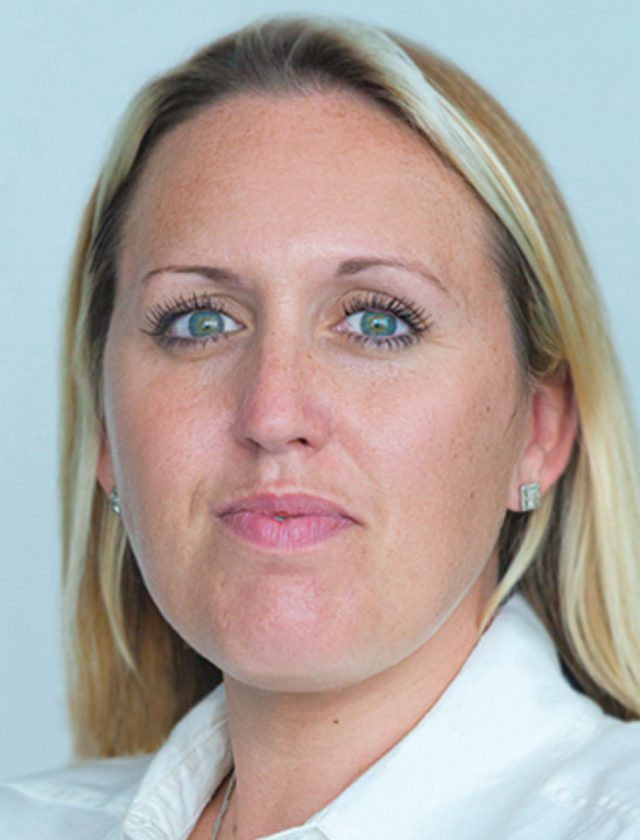
Please tell us a little about your career to date and current day-to-day job responsibilities at LMAX Digital.
I’ve been at LMAX Group for almost 15 years, most recently leading the growth strategy at LMAX Digital, our institutional-only Digital Assets exchange that we launched in 2018. I have spent most of my career at LMAX Group covering all things operational for the FX side of our business and prior to that, I worked at Cantor and UBS.
My primary responsibility at LMAX Digital is to grow and build the exchange. Day-to-day this covers strategy and partnerships, alongside client coverage. As a Tradfi player with experience operating low latency and high throughput exchanges, we play an active role in building the wider institutional-grade Digital Assets ecosystem.
How did you get involved in the world of Digital Assets and what first attracted you to the market?
I had the opportunity to lead LMAX Group into the Digital Assets revolution alongside our CEO David Mercer, after spending nine years with the business in a variety of roles in FX.
We were well established and recognised for operating institutional FX exchanges in 2017, and some of our clients were looking to access this new asset class of cryptocurrency. What they were lacking was true institutional-grade exchange infrastructure to do so, and a venue that they could trust and were familiar with. After just a few months of work behind the scenes, LMAX Digital was born. I was ready to embark on an exciting new career adventure so when the opportunity to launch and lead LMAX Digital presented itself, I seized it with both hands.

Who are your key executive team at LMAX Digital and what roles do they each play in helping to drive the business forward?
We have an amazing pool of talent within LMAX Group, and subsequently within LMAX Digital.
I am supported day-to-day by our compliance, operations and sales directors focused on different regions around the world, and critical to the business are several technology and developer specialists who are continuously refining and improving all aspects of our technology and exchange infrastructure.
Our team within LMAX Digital is lean and nimble. Within LMAX Group we have a very adaptable team, and therefore access to pools of talent and expertise across the broader business functions as required, depending on our client needs. This bodes well for both bull and bear markets.
Please tell us about the products and services that LMAX Digital currently provides and the types of clients you are servicing.
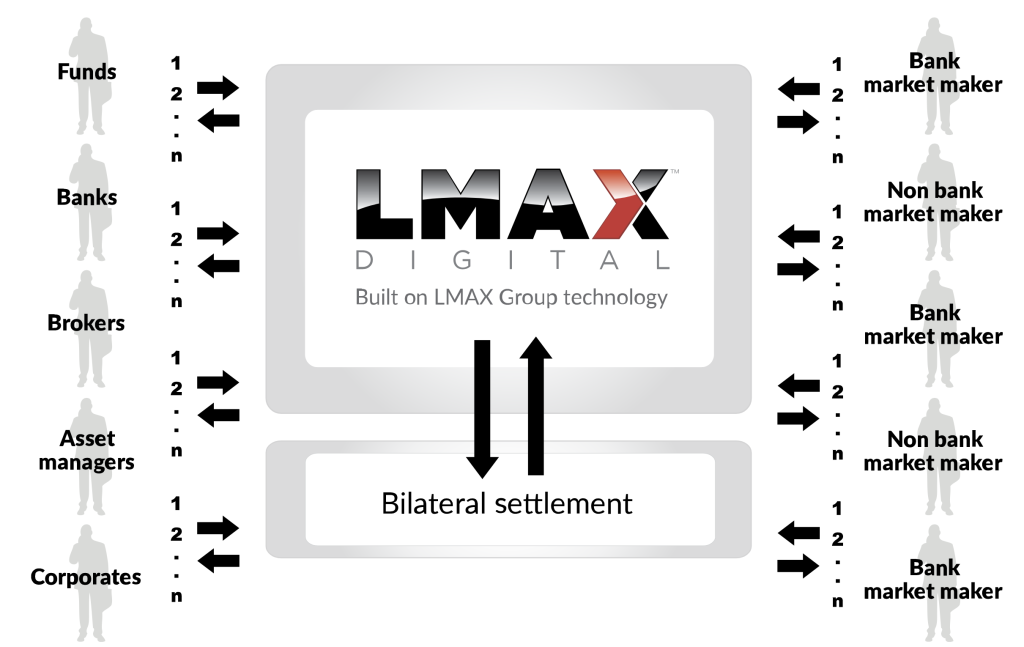
LMAX Digital is built on the same low-latency, high throughput exchange technology as LMAX Exchange. We play a prominent role in shaping and developing the market structure for institutional Digital Assets trading.
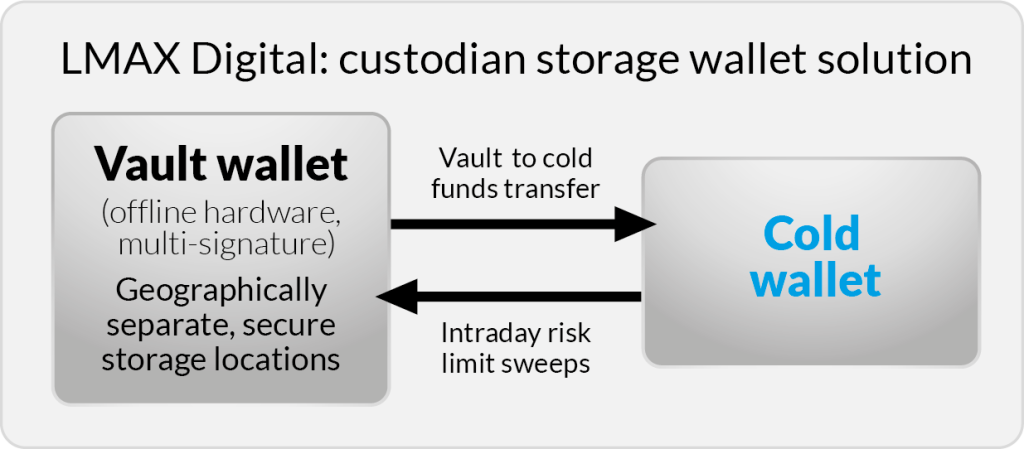
We are regulated as a DLT provider for both execution and custody services and therefore offer both physical trading and custodial services for the most liquid cryptocurrencies, the largest being BTC and ETH, traded against various FIAT pairs. In addition, LMAX Digital also contributes real-time market data to the industry’s leading reference rate indices and provides real-time volume data feeds to major institutional analytics providers enabling efficient price discovery for all market participants.
LMAX Digital is part of a group that includes LMAX Exchange, a leading and well-respected FX trading venue. How much has that association helped LMAX Digital to establish itself?
I think it has helped enormously. We are recognised for our capabilities in FX and apply the same rigorous risk management protocols and governance to our activities in Digital Assets. In recent months, conversations with current and prospective clients interested in Digital Assets have increasingly started with FX, or through LMAX Exchange. The demise of lenders and banks Silvergate and Signature earlier this year, has prompted a funding gap and further banking challenges, so, clients are looking to LMAX Group for both FX and cryptocurrency conversions.
As mentioned, LMAX Digital technology is built on the same proven exchange technology that has played a prominent role in the shaping of the FX ecosystem – and is now doing the same for developing the market structure for institutional cryptocurrency trading.
In what ways have you leveraged state-of-the-art technology to deliver the type of services your clients are looking for?
LMAX Digital, like traditional asset exchanges, has low latency, high throughput, institutional grade technology infrastructure enabling consistent and reliable exchange performance and orderly markets in times of high volatility. LMAX Digital operates venue controls preventing prices being shown where spreads are excessively wide and volatility bands act as a circuit breaker. Such controls and the resilience of our technology are the key differentiators in infrastructure between traditional institutional exchanges that our clients are looking to trade on and what you might find in a retail crypto-native exchange for example.
Recent crypto scandals have caused a great deal of reputational damage to the market. What is being done to repair this and what steps can the industry take to ensure this never happens again and to encourage more institutional engagement with Digital Assets?
Events of 2022 have certainly held the industry back in terms of progression and there has been a reputational contagion that hangs over the industry. In terms of what the industry is doing, or needs to do, is mirror the market structure you see in traditional financial services – less vertical integration and a separation of services, effectively unbundle operations such as trading and custody to ensure those models are something of the past.
We also need more well-defined regulation which will encourage more institutional involvement in the Digital Asset ecosystem. Momentum is building for the regulated, responsible use of cryptocurrency, however, the absence of a regulatory framework anywhere in the world right now is holding back institutional adoption.
Regardless of how long those frameworks take, we would encourage the industry to maintain the highest standards and best practice, as if that regulation were already in place.
What are the main benefits to businesses that are first movers into new markets like Digital Assets which have so much exciting potential?
The first mover advantage is a relevant phenomenon we are all familiar with – look at Bitcoin, as an example. However, what we have seen from the multiple black swan events over the past year, is that the first-mover advantage in this nascent asset class – and growing too quickly – is not always an advantageous position to be in.
There are advantages to not being a leader or early adopter, but a fast follower. What we are seeing, and something that has been more popular as an expression in 2023 within the Digital Assets’ ecosystem is the second mover advantage. Learn from the mistakes – and successes – of the first movers to build and conduct business effectively as a second mover or fast follower.
What work is LMAX Digital doing to develop and roll out new products and services for Digital Asset traders and investors?
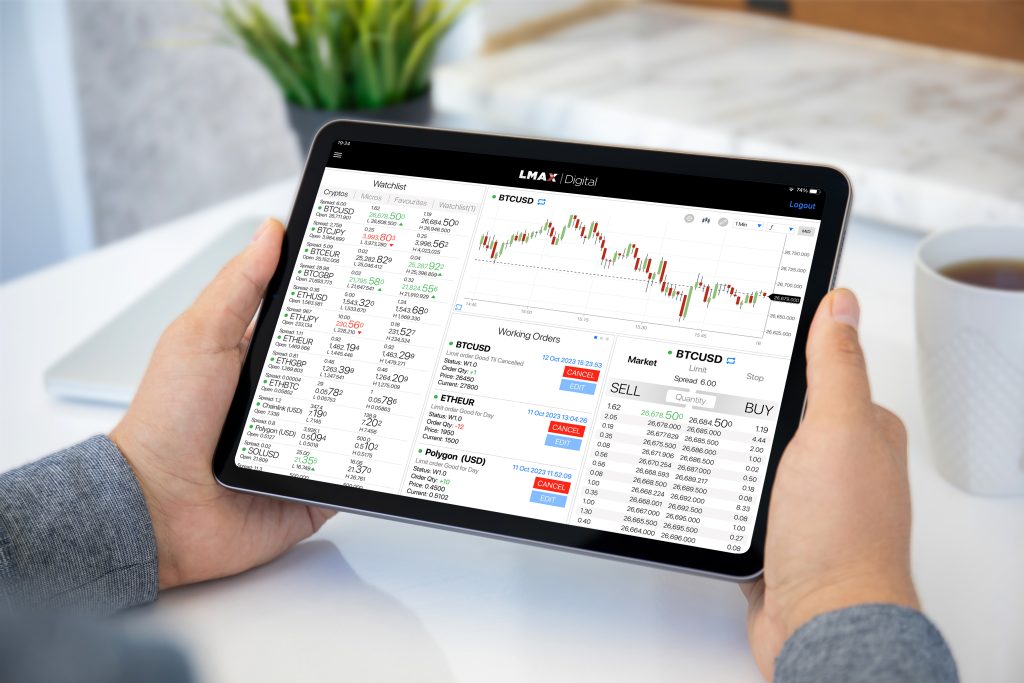
We’re always looking to elevate our offering as well as provide our prospective and current clients with the most innovative and industry-leading proposition. We have a lot of exciting new offerings that we will announce in the coming months. Day-to-day, we are a primary price discovery venue and a real-time data source which provides critical market insight to those in the industry.
Since our launch, LMAX Digital has been the fastest growing exchange within LMAX Group and has seen ~$1 trillion of crypto currencies traded since inception, 190 million trades completed, and 750 global institutional investors onboarded to-date. And while volumes have been challenged in the last 12 months, client onboarding continues which is the key metric for us ahead of real institutional adoption.
What are your expectations about how the Digital Asset marketplace is likely to evolve over the next few years and how will you be positioning the company to remain at the forefront of developments?
The saying is that motion creates emotion but we’re currently experiencing quite an apathetic market, with not much volatility, and not many asset or sector specific events that are moving the market. It feels like we are at a stalemate due to a lack of certainty and regulatory surety.
However, we are looking at a more stable marketplace now with more institutions introduced into it. That’s not manifesting itself in huge volumes right now. For the market to truly develop, and for institutional adoption to truly eventuate, we need real-money capital: the banks, to be comfortable functioning within the ecosystem that we continue to build. The establishment of regulatory frameworks in various jurisdictions will address that challenge.
In terms of future-gazing, we expect a bull market to emerge in the next 12-24 months, however, it won’t be triggered solely by the inevitable spot bitcoin ETF approval in the US, but by macroeconomic facts, the cyclical nature of markets, geopolitical movements, and sector specific events such as the bitcoin halving.
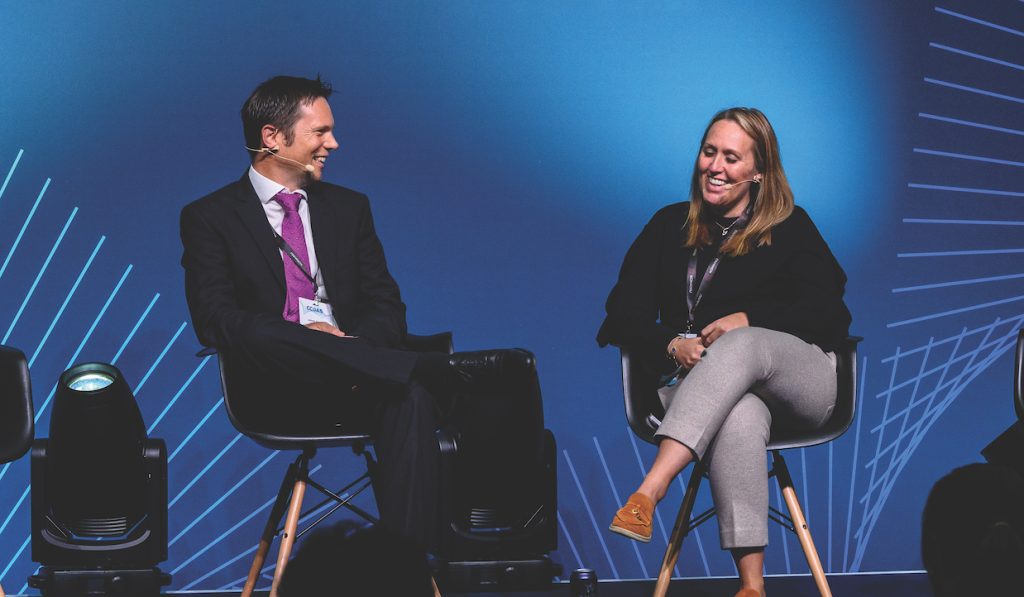
“We’re always looking to elevate our offering as well as provide our prospective and current clients with the most innovative and industry-leading proposition”